By this point of the camp, everyone is super tired, and half the class is falling asleep. It didn’t help that today’s lecture was super complex, so I’ll definitely have to review it over the weekend.
Roberto introduced photolithography and cyanotype printing, and he related the two to analog/film photography because developing film has many analogous steps to the other two processes. All three processes involve covering a light-sensitive substrate with a stencil/mask that only allows light in specific spots to pass through, then exposing the substrate to UV rays to print a specific image/pattern onto the substrate. However, all three processes are used for different purposes: developing film, as stated before, is for photography; photolithography, meaning “writing on stone with light,” is used to imprint circuit patterns onto silicon to make microchips; and cyanotype printing is used to create monochromatic images without a camera.
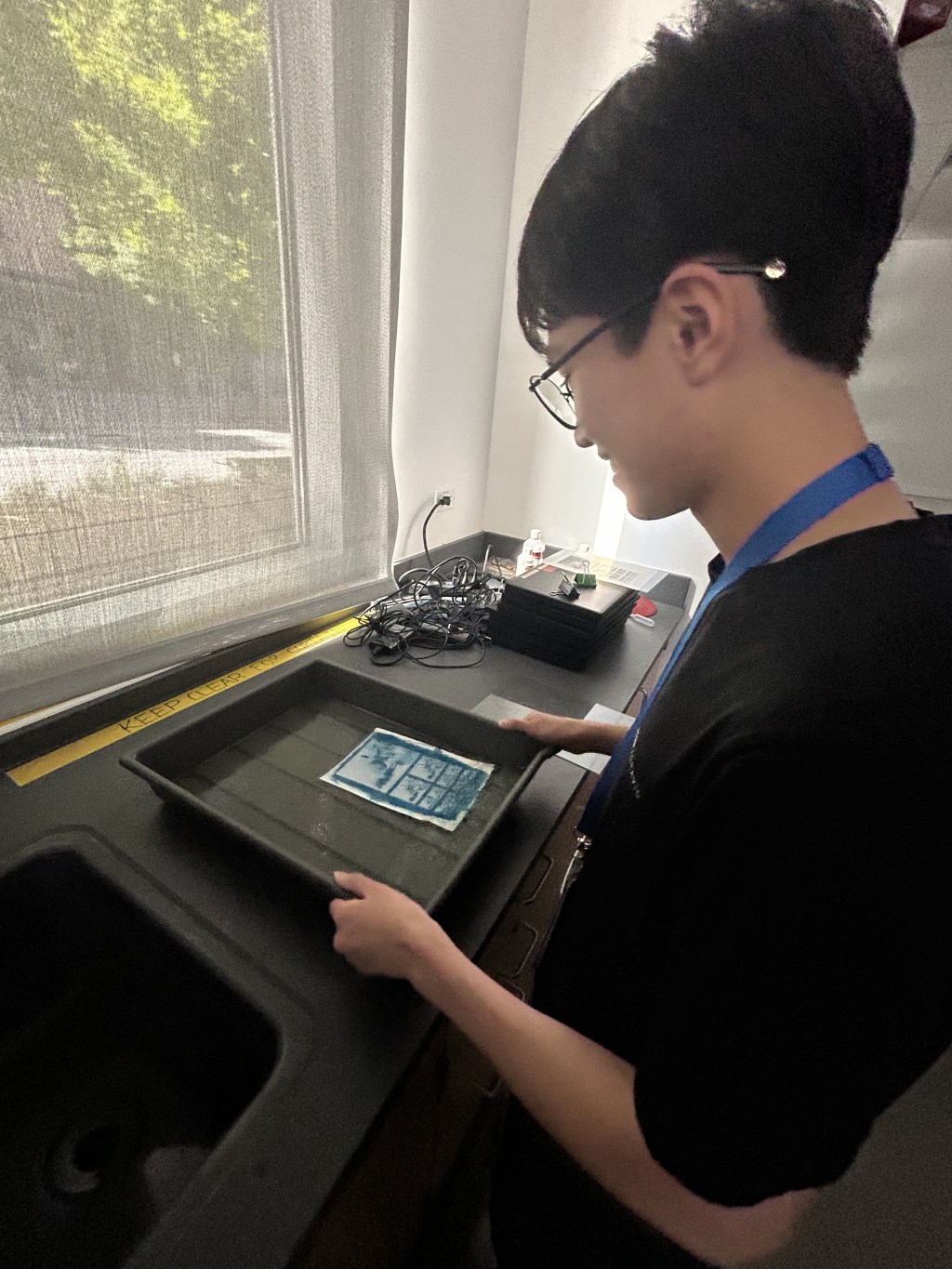
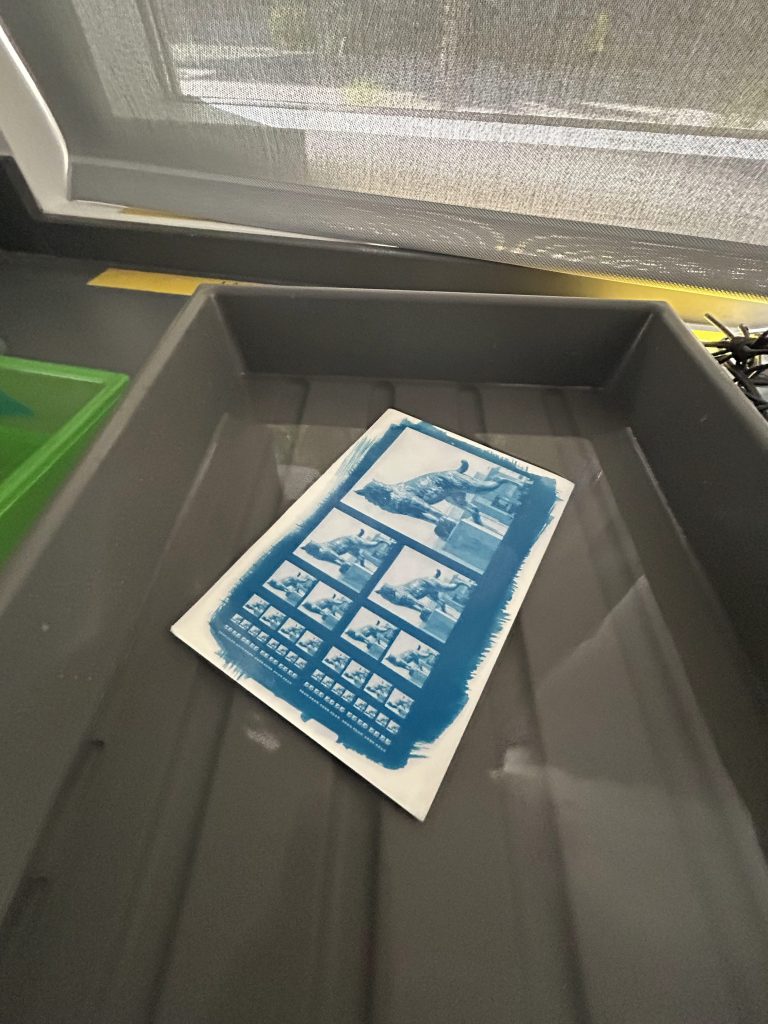
Our lab in the afternoon was, of course, cyanotype printing. We first had to combine 20 drops each of potassium ferricyanide and ferric ammonium citrate in a beaker and swirl the mixture until it became green. Then, we painted the mixture onto a sheet of paper and let it dry. For our experiment, we had two samples of two types of paper each: cold-pressed cellulose paper and hot-pressed cotton paper. After the mixture dried on the paper, we covered it with a negative image that served as our mask and exposed it to UV rays. While other groups had artificial UV light sources, my group had to put our samples under the sun because the light source provided to us was too weak. The resulting images turned from green to blue. Then, we rinsed the images in a basket of water, continuously changing the water until it no longer became blue from rinsing the images. Finally, we left the finished product to dry.
While this lab helped me understand the process of cyanotype printing a lot better, it also raised a couple new questions. Why do the UV rays turn the chemical mixture from green to blue? How does the distance of the substrate from the light source affect the images produced? Are there other chemicals that will react to UV rays in the same way that potassium ferricyanide and ferric ammonium citrate do? If so, why don’t we use those instead?


Leave a Reply