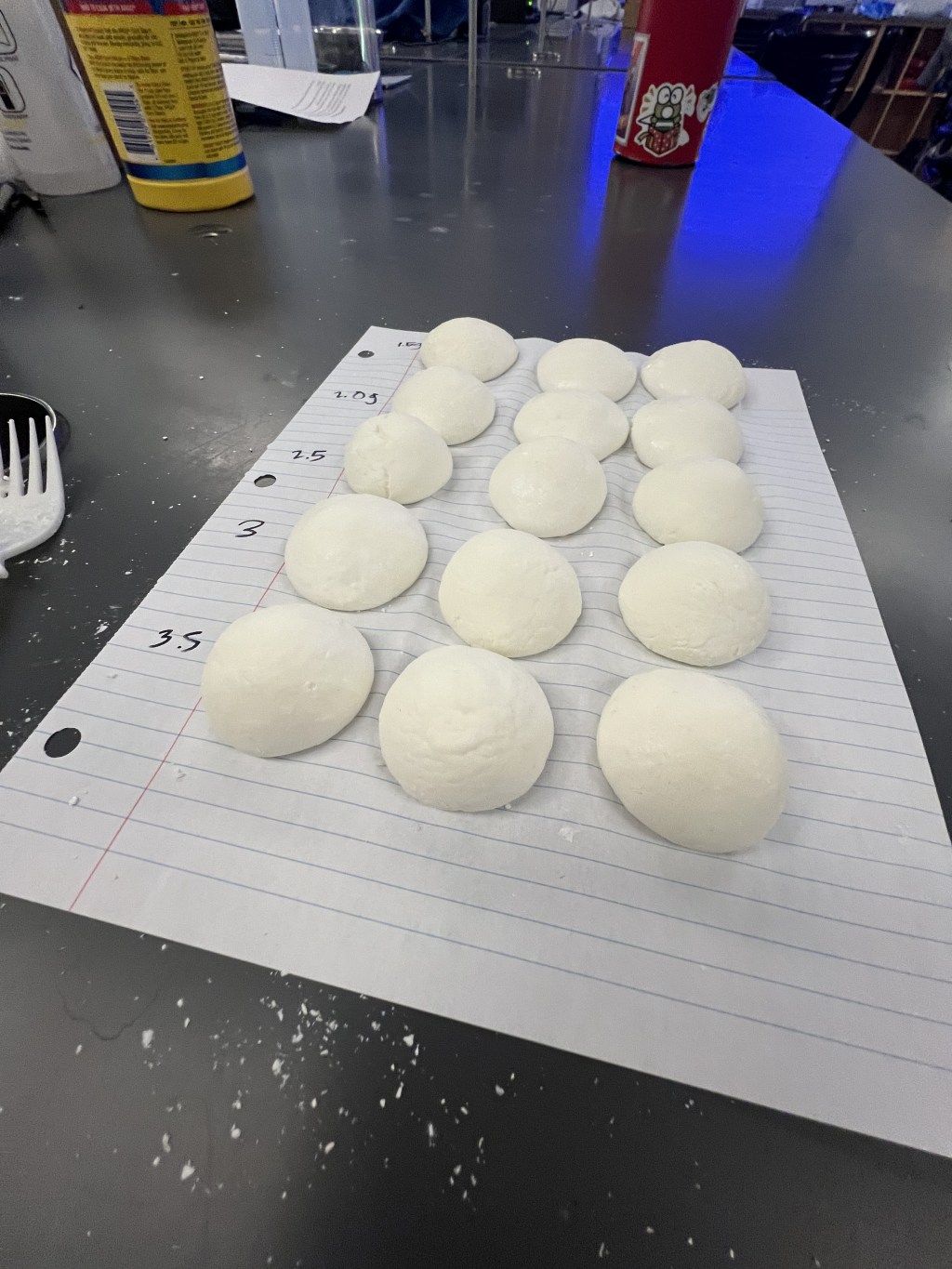
A crucial part of the COSMOS program is the final project and the final project poster that students in groups of two to four present on the last day of the camp in a gallery-walk fashion. Since each group’s completed poster needs to be submitted by Wednesday for printing, Professor Kolodka gave us the whole day in the lab to conduct the experiments that we wanted to make posters about.
My group chose to gather more data for the bouncy ball lab that we did yesterday. We planned to make eight borax-water solutions, starting from 1.5 grams of borax to 5 grams and incrementing by 0.5 grams for each solution, and to make three balls with each solution. Each ball would then be dropped three times, and we’d make two scatterplots: one with every data point and one with the average of the three balls for each concentration.
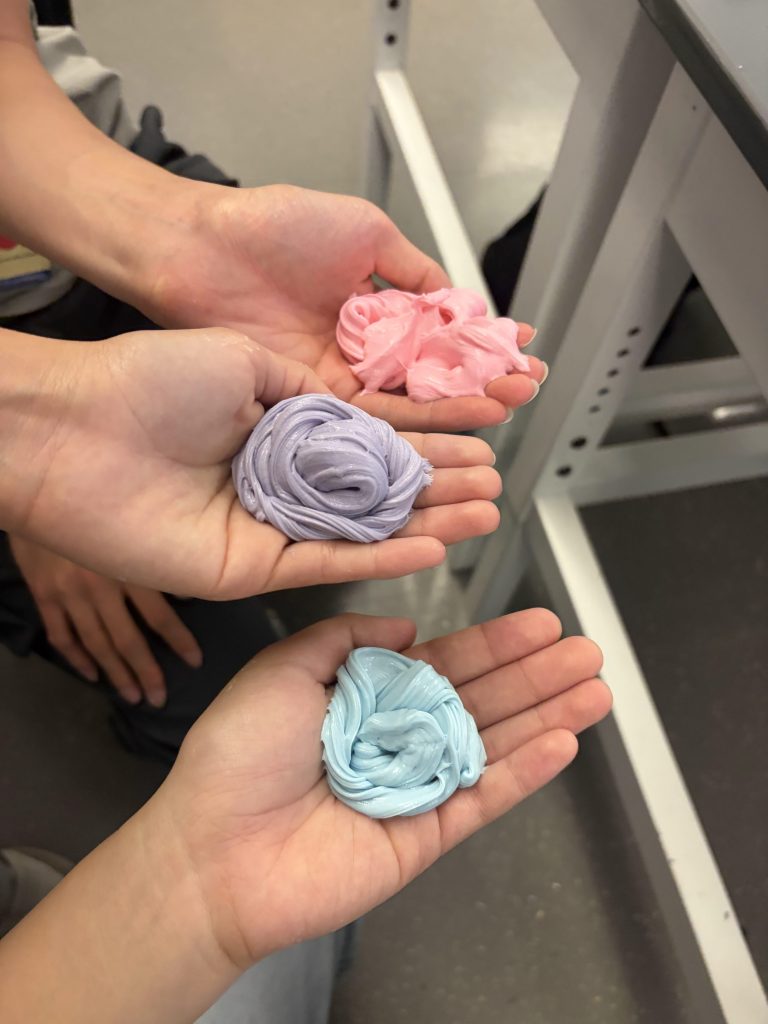
Our initial plan was to first make all the borax solutions and then slowly make each bouncy ball. One of the problems that we ran into yesterday was that the tap water in the lab wasn’t hot enough for the borax to go into solution, so today we brought hot water from the dining hall to create our solutions. However, we failed to realize that the borax would settle out of solution if we allowed it to cool down to room temperature, and once that happened, we wouldn’t be able to dissolve the borax in the same water again, so we ended up wasting a lot of borax, but we were able to make and test all the balls in the end. We even had time to test three balls with a 1-gram borax solution, and we tried to make three more with a 0.5-gram solution, but this borax concentration was too low to create a substance stiff enough to be shaped into balls, and we ended up making three batches of slime instead.
When we created the scatterplots with Google Sheets, the overall trend was that the bounce height increased as the borax concentration increase, which was different from what we observed yesterday. However, the balls made with the 3.5-gram borax solution was the only concentration to not follow this trend: the bounce height had a small dip at this concentration before increasing again and returning to the increasing trend. I also remember this concentration being the most difficult one to form the bouncy balls out of. We most likely made some human error in measuring the ingredients which led to this deviation, but we ran out of corn starch and couldn’t make new bouncy balls to redo these trials.


Leave a Reply